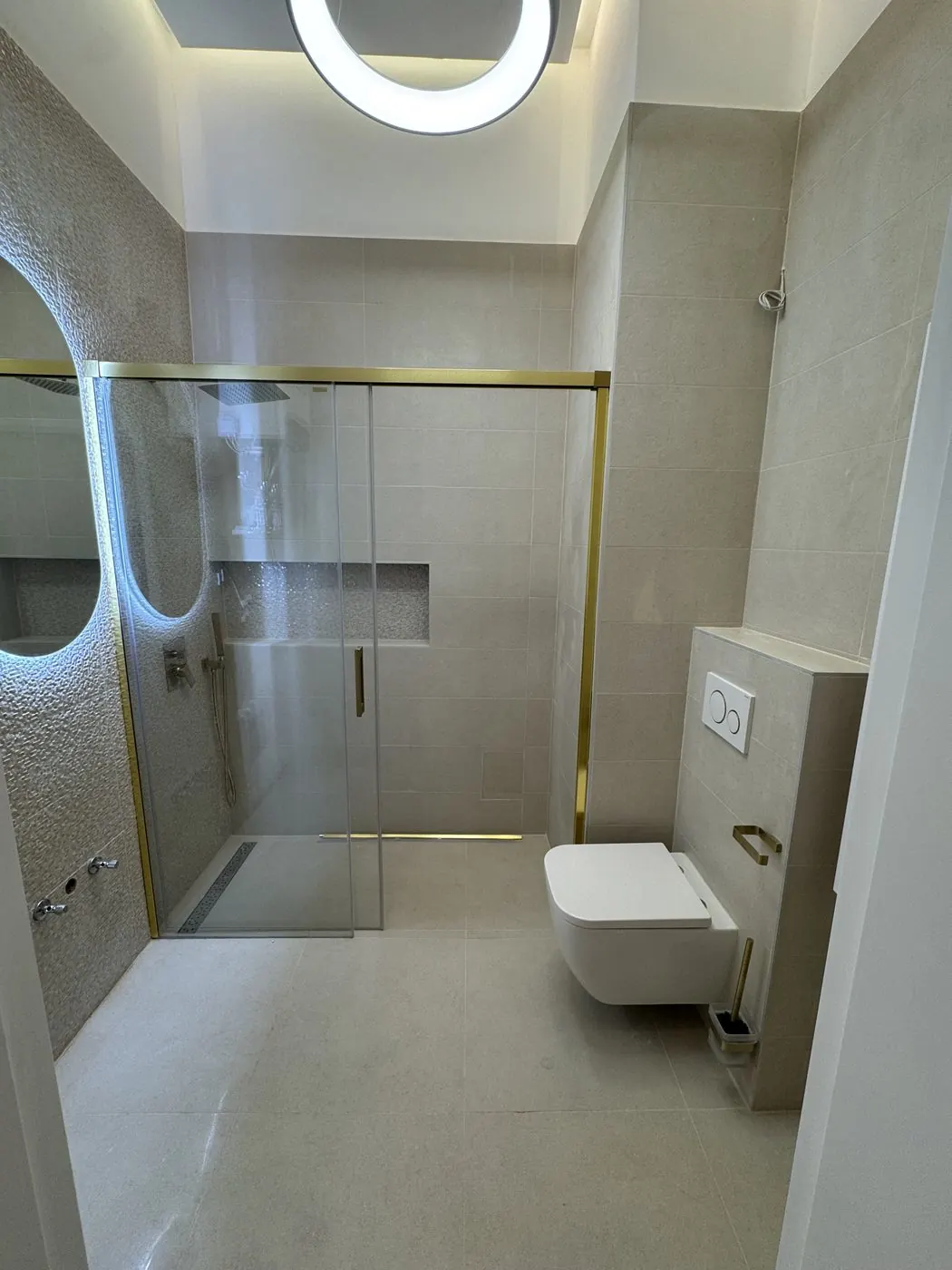
Bathroom Renovation Step by Step: From Demolition to Painting
The bathroom is the densest room of any home: water, electricity, humidity and tiling meet on a few square metres. Its renovation tolerates no improvisation – from demolition to painting, every step works for the next one.
The bathroom is the densest room of any home: water, electricity, humidity and tiling meet on a few square metres. Its renovation tolerates no improvisation – from demolition to painting, every step works for the next one. Here is the full process, with the critical points and the time it takes.
Bathroom renovation is where “cheap” solutions bite back the hardest: skipped waterproofing shows up on the neighbour's ceiling, a bad slope as a puddle in front of the shower, randomly placed outlets as furniture that never quite fits. The good news: the process is entirely predictable when the order and the details are right.
Summary
- A full bathroom renovation typically takes 2–4 weeks: demolition → plumbing and electrics → screed and wall repairs → waterproofing → tiling → fit-out → painting.
- Liquid-applied waterproofing is not an extra but a mandatory layer – full floor coverage and proper height on wet walls.
- Outlet positions are dictated by the furniture and sanitaryware plan, not the other way round.
- Tiling quality is decided by the preparation: flat substrate, slopes, edge profiles, silicone in the corners.
- If the bathroom has a window, replace it during the demolition phase.
- Order long-lead items (shower enclosure, furniture, bathtub) before demolition starts.
0. Planning: the bathroom is a centimetre-accurate genre
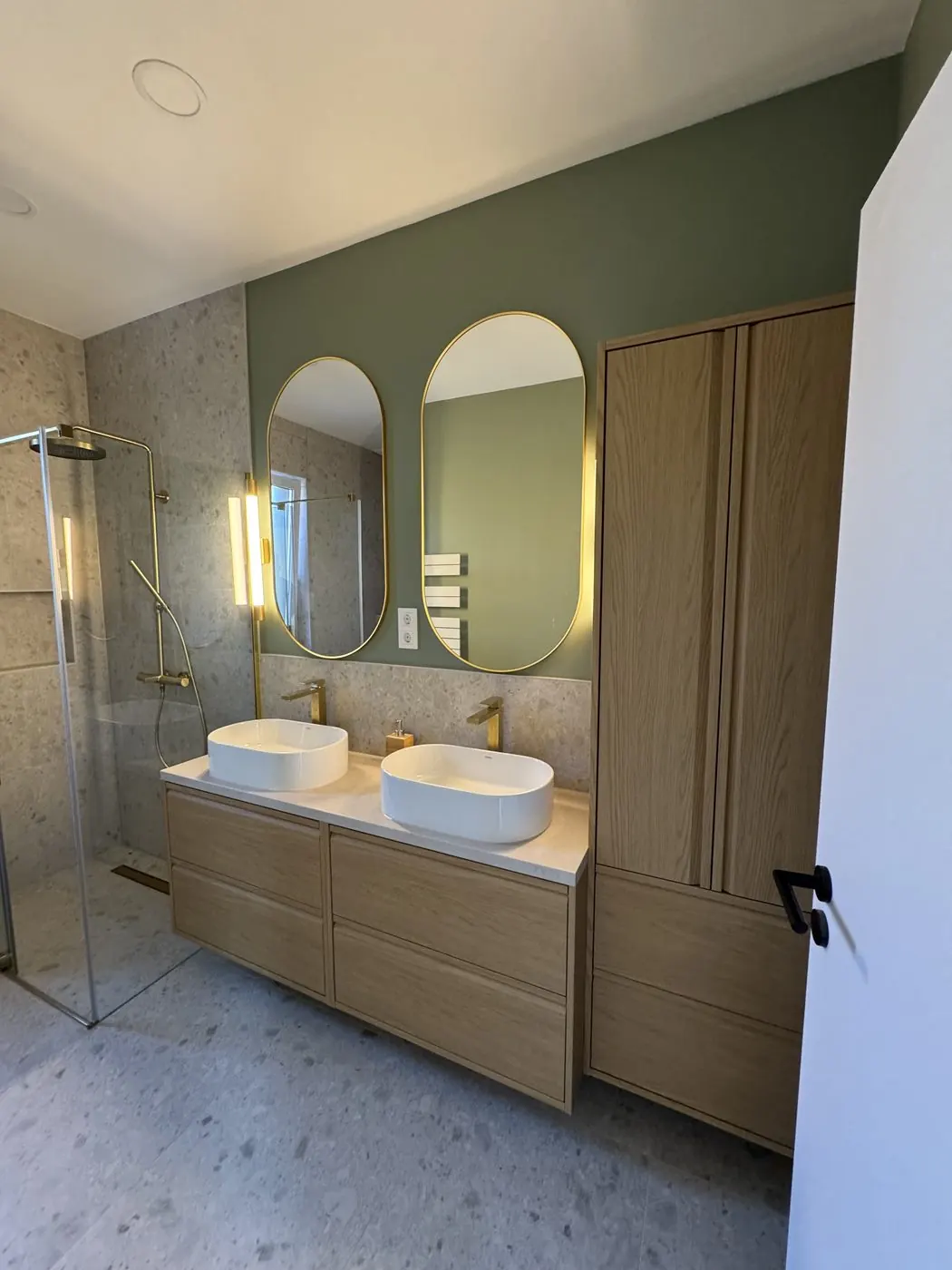
Before anything is demolished, the tiling and sanitaryware plan must be ready: where the basin, WC, shower or tub, washing machine and towel radiator go – and, measured to the centimetre, the water, drain and electrical outlets serving them. This is when lighting (ceiling plus mirror light), ventilation (extractor fan) and floor heating (wet system or electric mat) are decided. Long-lead items – custom furniture, shower enclosure, special tub – are ordered now, so they arrive by the time tiling is done.
The steps of the renovation
| # | Phase | What happens | Typical time |
|---|---|---|---|
| 1 | Demolition | Tiles, sanitaryware, old fittings, screed if needed; debris removal | 1–2 days |
| 2 | Plumbing rough-in | New water and drain pipes from the riser, outlets per plan, pressure test | 2–3 days |
| 3 | Electrical rough-in | Circuits, wiring per protection zones, RCD, lighting and appliance outlets, extractor fan | 1–2 days |
| 4 | Masonry work | Closing chases, wall repairs/plastering, screed repair or new screed with slopes, moisture-resistant plasterboard walls | 2–4 days + drying |
| 5 | Liquid waterproofing | 2 coats: full floor coverage with upturns; at least 2 m high at the shower; reinforcing tape in corners, collars at outlets | 1–2 days (drying between coats) |
| 6 | Tiling | Wall and floor tiling, cuts, edge profiles, grouting | 4–7 days |
| 7 | Fit-out | Sanitaryware, taps, shower enclosure, furniture, mirror, lights, switches, silicone | 1–2 days |
| 8 | Painting, handover | Mold-resistant paint on ceiling and untiled surfaces, cleaning, tests | 1 day |
Demolition: how far back to go
In a full renovation, demolition goes back to bare walls and the structural floor – only then does the real condition of the pipes and screed become visible, and only then can the layers be rebuilt properly. Demolition is also where surprises surface: corroded steel pipes, a soaked screed, crumbling plaster – so keep a reserve in the budget. In a condominium, schedule the noisy phase within the house rules' time windows, and coordinate riser-related work with the building manager.
Optional window replacement: if the bathroom has a window, replace it in this phase – so reveal repairs and tiling already fit the new window. For a humid room, a tilt function and obscure (etched) glazing are the practical choice.
Plumbing and electrics: what the tiles will hide forever
For plumbing the ground rule is: renew from the riser. Keeping old steel or lead pipes behind fresh tiling is false economy – a later burst reopens everything. Every new line ends with a pressure test, drain slopes are checked, and it is worth photographing the pipe routes before the walls are closed.
Bathroom electrics follow their own rulebook: lights, switches and sockets are placed according to protection zones, and the room's circuits must be protected by an RCD. Now is the moment to think of a dedicated socket for the washing machine and dryer, the electric towel radiator, mirror lighting and the thermostat of an electric floor heating mat – none of these can be wired neatly afterwards.
Screed, wall repairs and waterproofing: the invisible quality
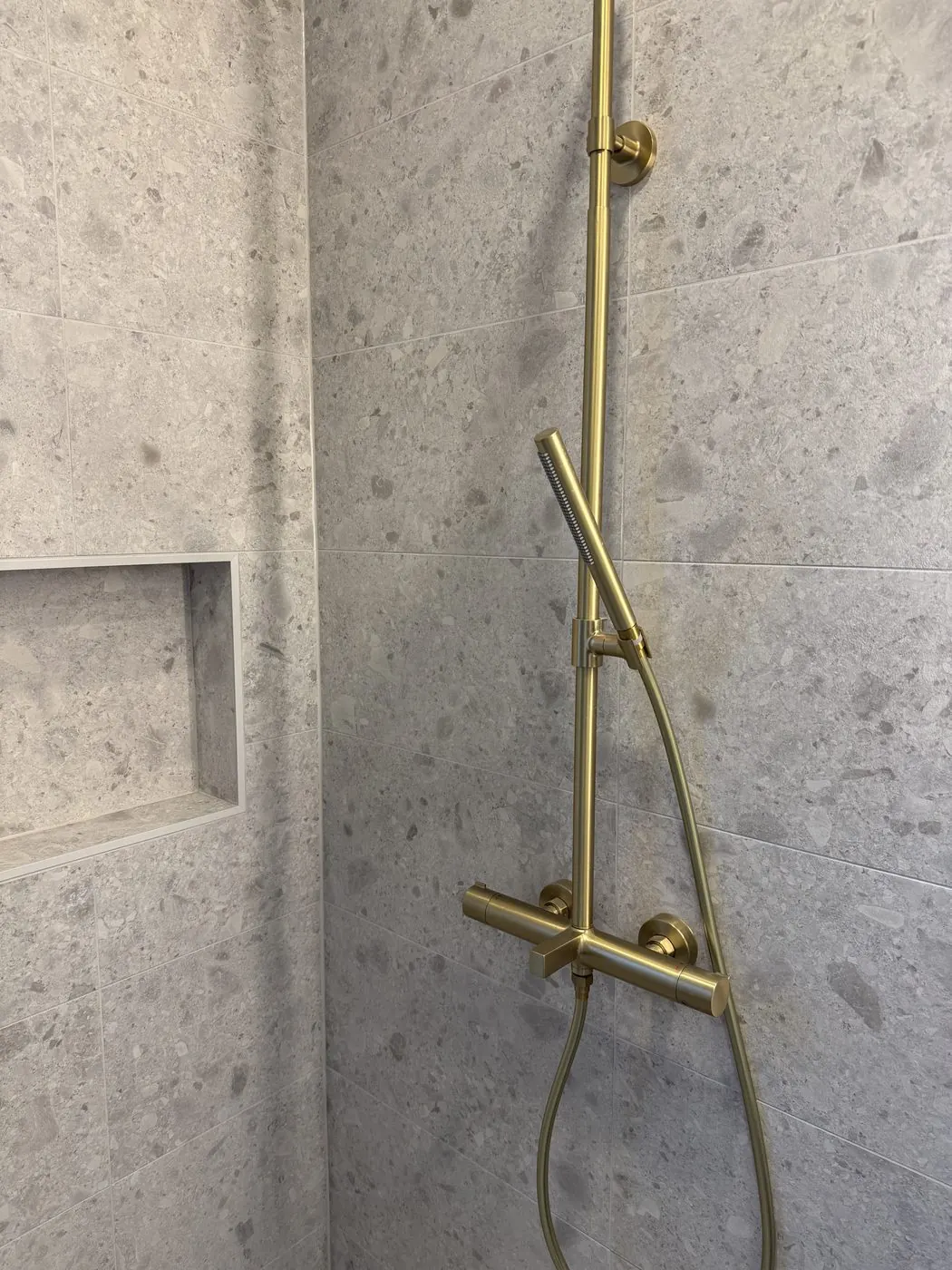
Tiling requires a flat, solid, dust-free and primed substrate: screed repair or a new screed (with built-in slopes towards a linear drain), repaired and plastered walls, moisture-resistant plasterboard where needed. Then comes the liquid-applied waterproofing, in two coats: the full floor with 15–20 cm upturns onto the walls, at least 2 metres high around the shower and tub, with reinforcing tape in every corner and collars at every outlet. Tiles and grout are not waterproof – the membrane is what protects your slab and your neighbour's ceiling.
In a bathroom, the most expensive layer is the one you cannot see – and the one that costs the most is the one that is missing.
Tiling: where the plan becomes visible
Tiling decides the final look: the layout of the tiles (where the first row starts, where the cuts fall), edge profiles or mitred edges, the precise detailing around niches and the linear drain. With large-format tiles, substrate flatness matters even more; on the floor, choose a slip-resistant surface. Corners and material transitions get silicone, not grout – it is a movement joint, not decoration.
Fit-out, painting, handover
Fit-out is the reward phase: sanitaryware, taps, the shower enclosure, furniture, mirror and lights all land in place – and the centimetre-accurate outlet plan pays off. Finally, the ceiling and untiled surfaces get mold-resistant, humidity-tolerant paint, followed by silicone sealing, tests (drainage, tightness, fan) and cleaning. Grout and silicone need curing time before first use – we tell you exactly how long at handover.
Bathroom renovation with TeleHome
TeleHome delivers bathroom renovations as stand-alone projects or as part of an apartment renovation across Budapest and Pest county: demolition, plumbing, electrics, waterproofing, tiling, fit-out and painting in one hand, with an itemized quote and a fixed deadline. At the survey we also check the riser – if it needs replacing, it is best done together with the renovation. Request a survey.
Frequently asked questions
How long does a bathroom renovation take?
A full renovation from demolition to handover typically takes 2–4 weeks, depending on size, drying times and any riser-related work. Order long-lead items (furniture, enclosure) before demolition.
Is waterproofing mandatory in a bathroom?
Professionally, yes: tiles and grout are not waterproof. The liquid membrane covers the whole floor and the wet wall zones, with reinforcing tape in the corners.
Can the old pipes stay during a bathroom renovation?
With old steel or lead pipes it is not worth it: an outdated pipe left behind fresh tiling reopens the whole renovation at the next leak. Rebuild from the riser and close the walls only after a pressure test.
Should the window be replaced during a bathroom renovation?
If it is old, yes – during the demolition phase, so reveals and tiling fit the new window. Choose a tilt function and obscure glazing for a humid room.
What is the correct order of a bathroom renovation?
Demolition → plumbing and electrical rough-in → masonry and screed → liquid waterproofing → tiling → fit-out → painting. Each phase is the precondition of the next.
Related articles: Partial apartment renovation · Apartment modernization: windows, heating, hot water, insulation · Why most apartment renovations in Budapest go wrong at the start
Request a no-obligation quote
On-site survey, itemised cost estimate, fixed deadline and warranty – we reply within 1 business day.
- Reply within 1 business day
- Itemised cost estimate
- Fixed price, fixed deadline, warranty
Related articles
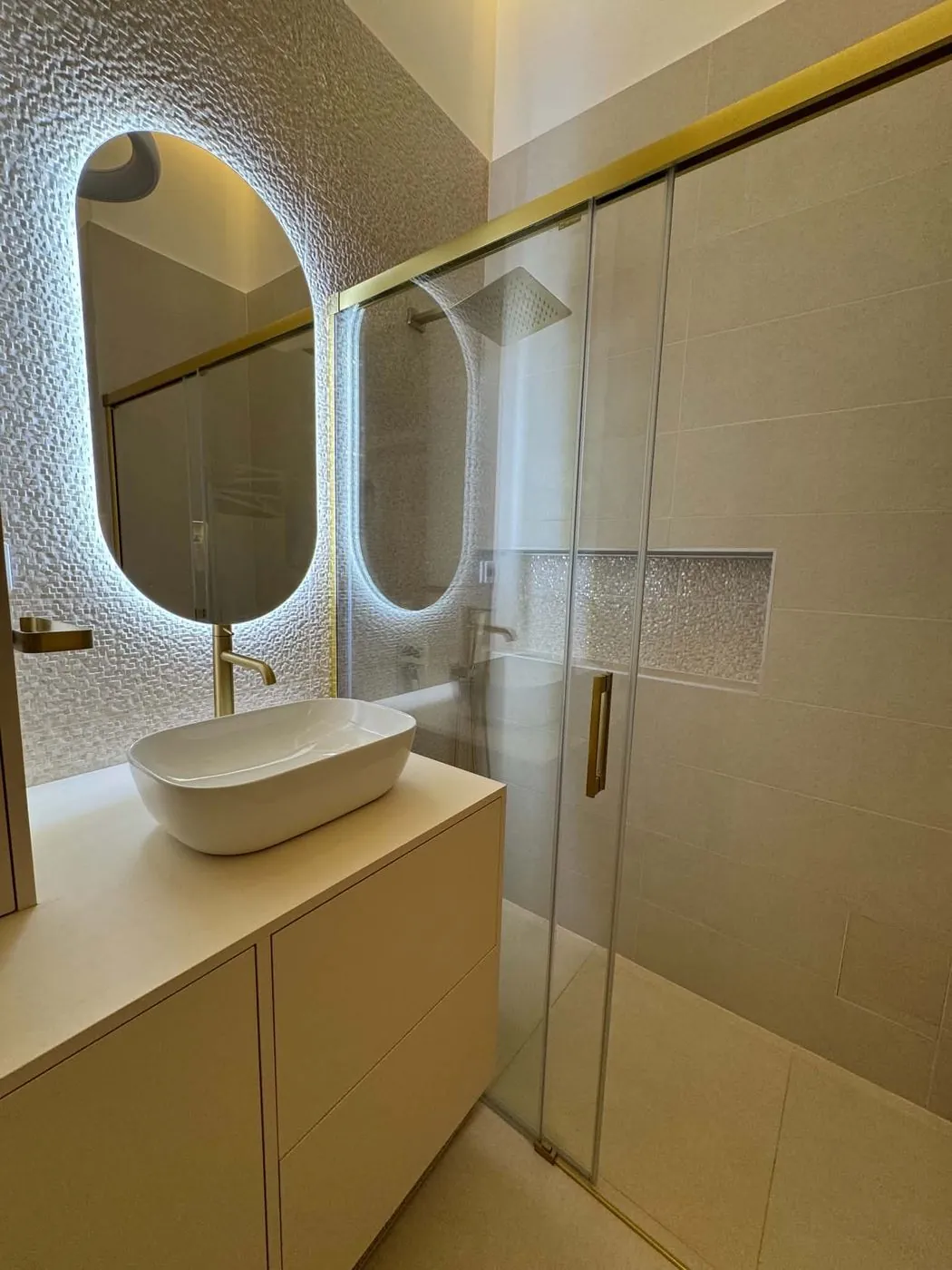
Apartment Modernization: Windows, Heating, Hot Water and Insulation
Modernizing an apartment starts where painting ends: windows, heating, hot water and insulation. These decide your utility bills and how the home actually feels.
Read more →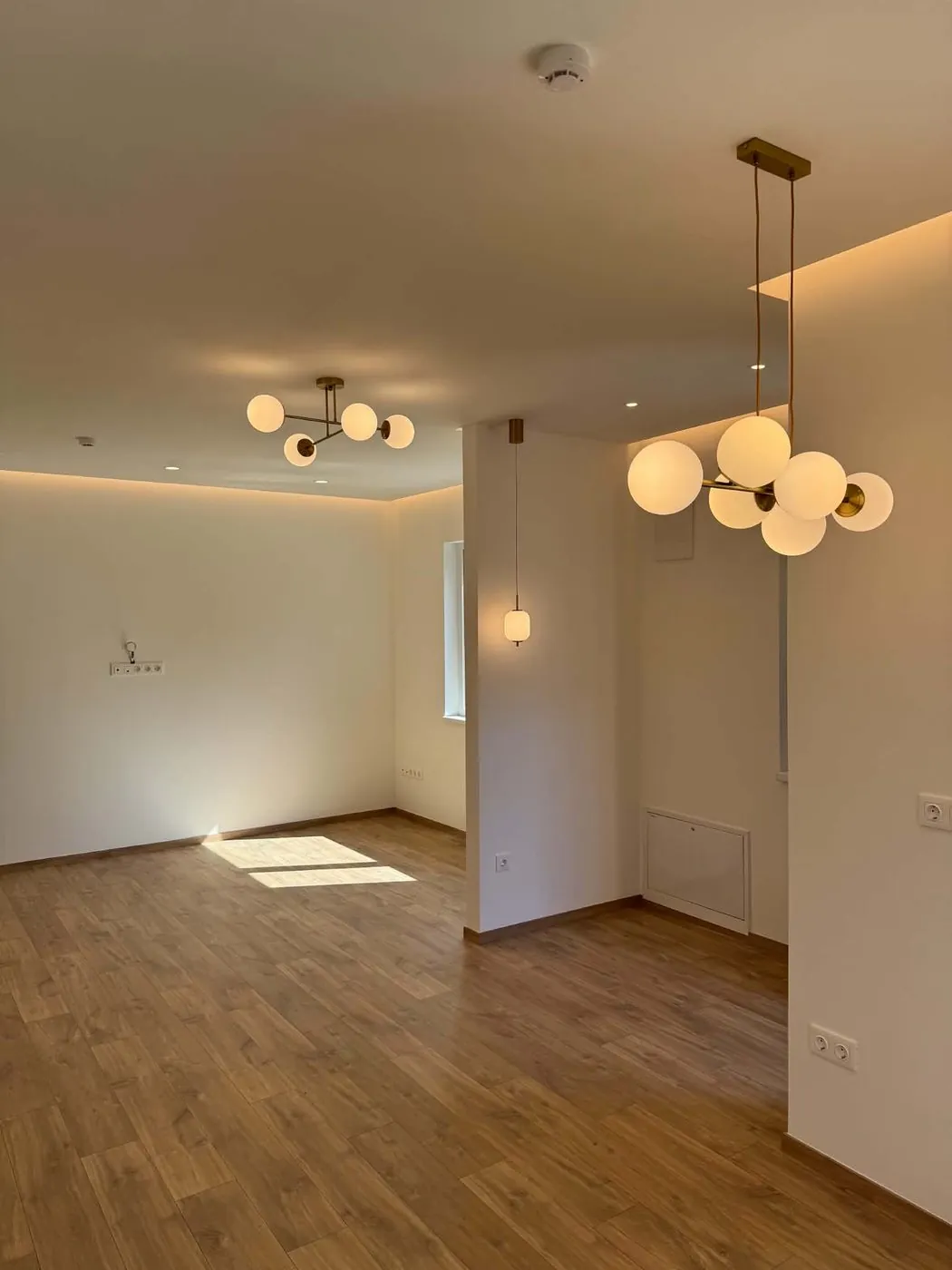
Partial Apartment Renovation: What It Includes and the Right Order of Work
Not every apartment needs a full renovation. If the plumbing and wiring are in good shape, a well-planned partial renovation – new flooring, interior doors, fresh paint, new fixtures, even a complete bathroom – can give you…
Read more →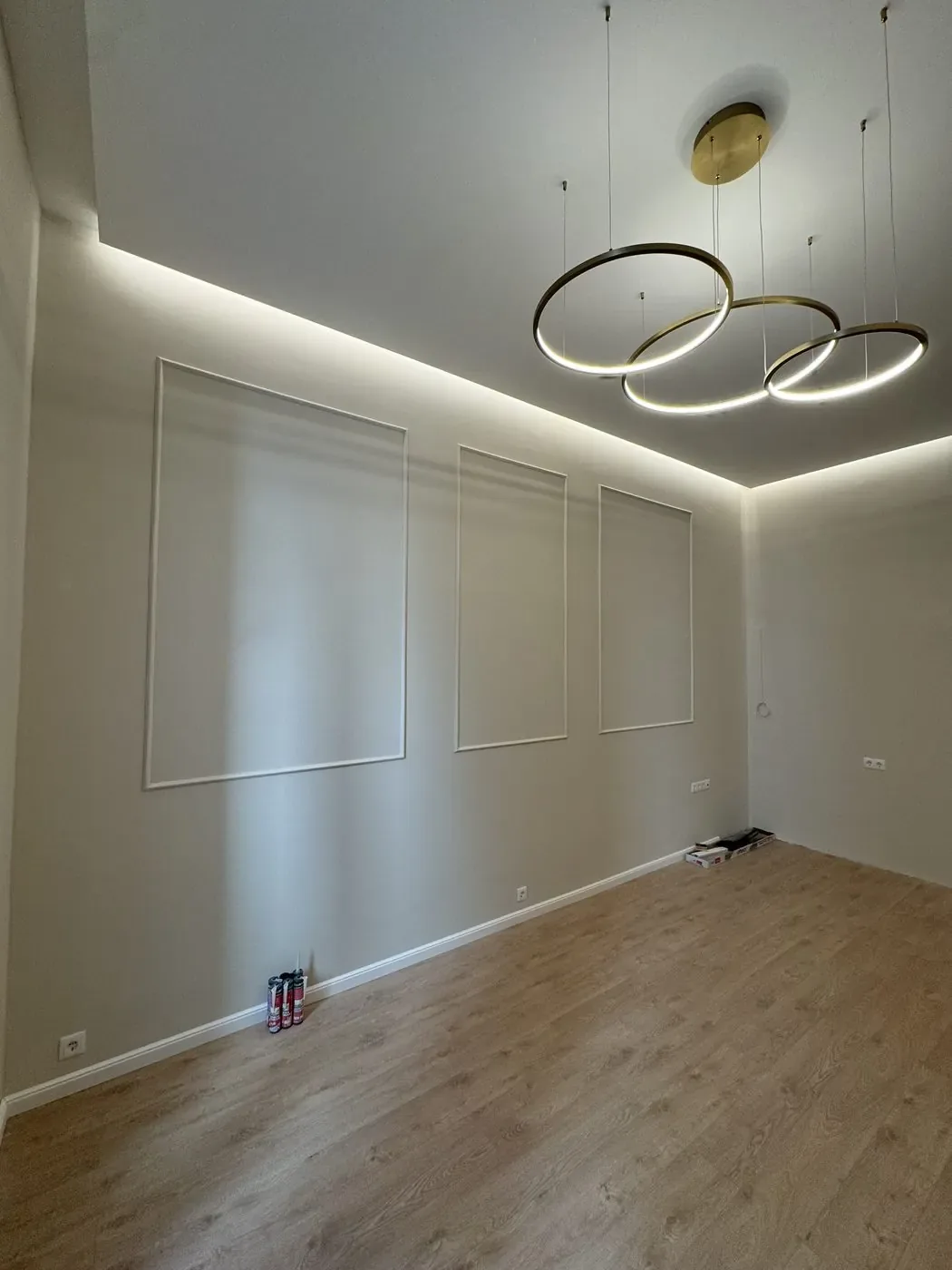
Facade Insulation on a Family House: System, Thickness, Pitfalls
Facade insulation is the best-paying part of a family-house renovation – but only if it is built as a system: from matching materials, thick enough, thought through from the plinth to the eaves.
Read more →