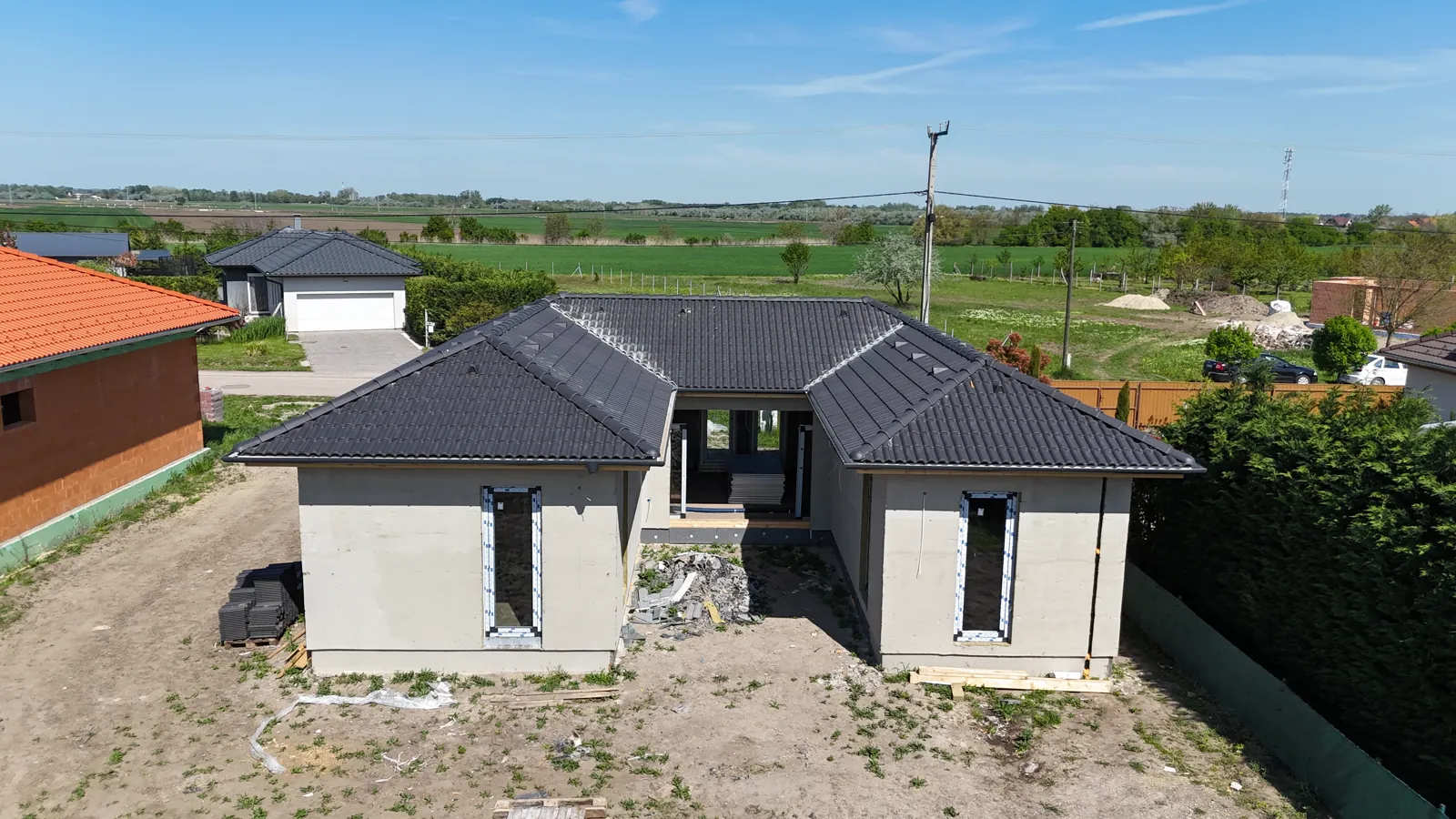
Financing a SIP House in Hungary: Loans 2026
Yes, a certified SIP house qualifies for Otthon Start, CSOK Plusz and rural CSOK. We explain the Hungarian schemes and how bank disbursement works during construction.
Last updated: August 2026. Subsidy conditions can change with legislation – the final terms are always set by the individual bank and the government decrees in force. The summary below is for information only and does not constitute financial advice.
Key takeaways
- A certified (NMÉ/ÉMI or ETA) SIP house is accepted by Hungarian banks as mortgage collateral exactly like brick, and qualifies for every state subsidy.
- Otthon Start: up to HUF 50 million, max. 25 years, fixed interest of at most 3% – for first-time buyers, including new builds.
- CSOK Plusz: HUF 15/30/50 million subsidised loan depending on the number of children, max. 3% interest.
- Rural CSOK: in about 2,600 small settlements, a non-repayable grant (HUF 1/4/15 million) + subsidised loan + VAT refund of up to HUF 5 million.
- Banks disburse in stages, after the fact, based on completion level – so a payment schedule aligned with the fast SIP timeline matters.
- All figures as of August 2026.
The most important question: can a SIP house be financed at all?
Yes. Hungarian banks accept lightweight residential buildings as loan collateral, and every state subsidy applies to them – on one condition: the structure must be a certified system, meaning it holds a National Technical Assessment (NMÉ, colloquially an "ÉMI licence") or a European Technical Assessment (ETA), and the manufacturer must issue a declaration of performance. The SIP system we build has both – and we compile the documents ready for the bank on your behalf.
What the subsidised loans do NOT cover: mobile homes, container houses and undocumented structures of "unknown origin". A certified SIP dwelling is legally the same residential property as a brick one.
What sources can you build from in 2026?
Otthon Start Programme – fixed 3% interest
Launched in September 2025, the programme is aimed at first-time home buyers and can also be used for building a house (as of August 2026).
- Loan amount: up to HUF 50 million, term up to 25 years, interest fixed for the entire term at no more than 3%.
- No age, marital-status or child-related conditions; required: 2 years of continuous Hungarian social-security (TB) coverage.
- First-time buyer condition: you have no residential property in a built-up area and have had none in the past 10 years (exceptions: a share of at most 50%, or a property worth under HUF 15 million).
- Value limits: for a single-dwelling house the total cost must not exceed HUF 150 million, and the price per square metre must not exceed HUF 1.5 million/m² – the plot price does NOT count towards this.
- For new builds: the plot cannot be financed from the loan (it can form part of the own contribution); in practice banks expect 20–25% own funds; construction must start within 1 year of the contract and be completed within 6 years.
- Disbursement is staged according to completion level; before each instalment at least 70% of the costs must be evidenced by invoices.
Good news for SIP construction: the typical total cost of our houses sits comfortably below the HUF 1.5 million/m² limit – and the fast build makes the "6 years" rule laughably easy to meet.
CSOK Plusz – for married couples committing to children
- Interest-subsidised loan, interest capped at 3% for the entire term.
- Amount: up to HUF 15 million for 1 child, HUF 30 million for 2 children, HUF 50 million for 3 or more children.
- From the 2nd child onwards, HUF 10 million of principal is written off at the birth of each further child.
- Conditions: married couple, wife under 41 (with exceptions: pregnancy past week 12 or an adoption in progress), at least 2 years of TB coverage, deadlines for children committed to (1 child: 4 years, 2: 8 years, 3: 10 years).
- Can be used for building a new house; comes with stamp-duty exemption.
Rural CSOK – in small settlements
In the preferred small settlements (about 2,600 municipalities nationwide) a non-repayable grant is available for building a new house too:
- 1 child: HUF 1 million, 2 children: HUF 4 million, 3 or more children: HUF 15 million.
- An interest-subsidised loan (max. 3%) can be requested alongside it.
- For self-build in a small settlement, a VAT refund of up to HUF 5 million on construction costs is also available.
- We check whether your municipality is on the list as part of our plot assessment.
Babaváró loan
Free-use, which is why it is the most common tool for topping up the own contribution when building. It can be combined with the schemes above.
Combining the schemes
The schemes can be stacked: a common formula is Babaváró (own contribution) + Otthon Start + CSOK Plusz where children are planned, topped up in small settlements with rural CSOK and the VAT refund. The combined subsidised loan amount has an upper limit, and the detailed rules depend on personal circumstances – which is why we have this step calculated, free of charge, by a partner mortgage broker for our clients.
The 5% VAT
New residential property built under general contracting (up to 300 m² of usable floor area for a single-dwelling house) currently qualifies for the reduced 5% VAT rate. The legislator extends the rule's validity from time to time – we always state the current position precisely when we issue a quote.
How does bank disbursement work during construction?
A construction loan does not arrive in one sum: the bank disburses in stages, after the fact, according to completion levels. The process is similar for every structure type:
- Own funds go in first. Only then does the bank start disbursing.
- Milestones: typically foundations → structural completion (walls, roof) → windows/doors + building services → finishing works → occupancy. After each stage the bank's valuer checks progress at a site inspection, and the next instalment follows on that basis.
- Invoices: a defined share of costs (for subsidised loans typically at least 70%) must be evidenced by invoices.
The SIP-specific point: the rhythm of a SIP build is different from masonry – the structure stands in days, so the completion level jumps. This fits bank disbursement well, but it needs scheduling: manufacturing requires pre-financing, which the bank's after-the-fact disbursement does not always follow. We bridge this with a scheduled contractual payment structure – in our quote the payment schedule can be explicitly aligned with the bank's disbursement milestones. Ask any contractor for this!
Valuation: what does the bank look at in a SIP house?
The valuer looks at three things: the system's certification (NMÉ/ETA – which we have), the contractor's references and contract, and whether the budget is realistic. For this we hand over a ready-made bank documentation package: certifications, declaration of performance, technical specification, itemised budget, schedule. In our experience, with this package the credit assessment of a SIP house runs exactly like that of a brick house. Our completed houses are shown among our references – the bank's valuer sees these too.
Our process, step by step
- Free consultation + plot assessment.
- Preliminary budget and payment schedule (aligned with bank milestones).
- Free loan pre-qualification with our partner mortgage broker (offers from several banks).
- Contract → design → mortgage agreement with the bank.
- Construction in sync with the disbursement schedule → occupancy → final disbursement.
A quote request or a phone call is enough as a first step: we will tell you which scheme could apply in your situation, and how much own contribution you would need.
Frequently asked questions
Can I get an Otthon Start loan for a SIP house?
Yes – the programme is explicitly available for certified lightweight houses too; the conditions are first-time buyer status and the value limits, not the wall material (as of August 2026).
Can CSOK Plusz and Otthon Start be applied for together?
Yes, they can be combined (the combined subsidised loan has an upper limit); our partner mortgage broker calculates the details free of charge.
How much own contribution is needed, and what does the bank need about the structure?
Typically 20–25% own funds (the plot value usually counts towards this); the exact figure depends on the bank and the scheme. About the structure, the bank asks for the NMÉ (ÉMI) or ETA document, the declaration of performance and a contractor's contract with an itemised budget – we provide all of this ready-made.
Request a no-obligation quote
On-site survey, itemised cost estimate, fixed deadline and warranty – we reply within 1 business day.
- Reply within 1 business day
- Itemised cost estimate
- Fixed price, fixed deadline, warranty
Related articles
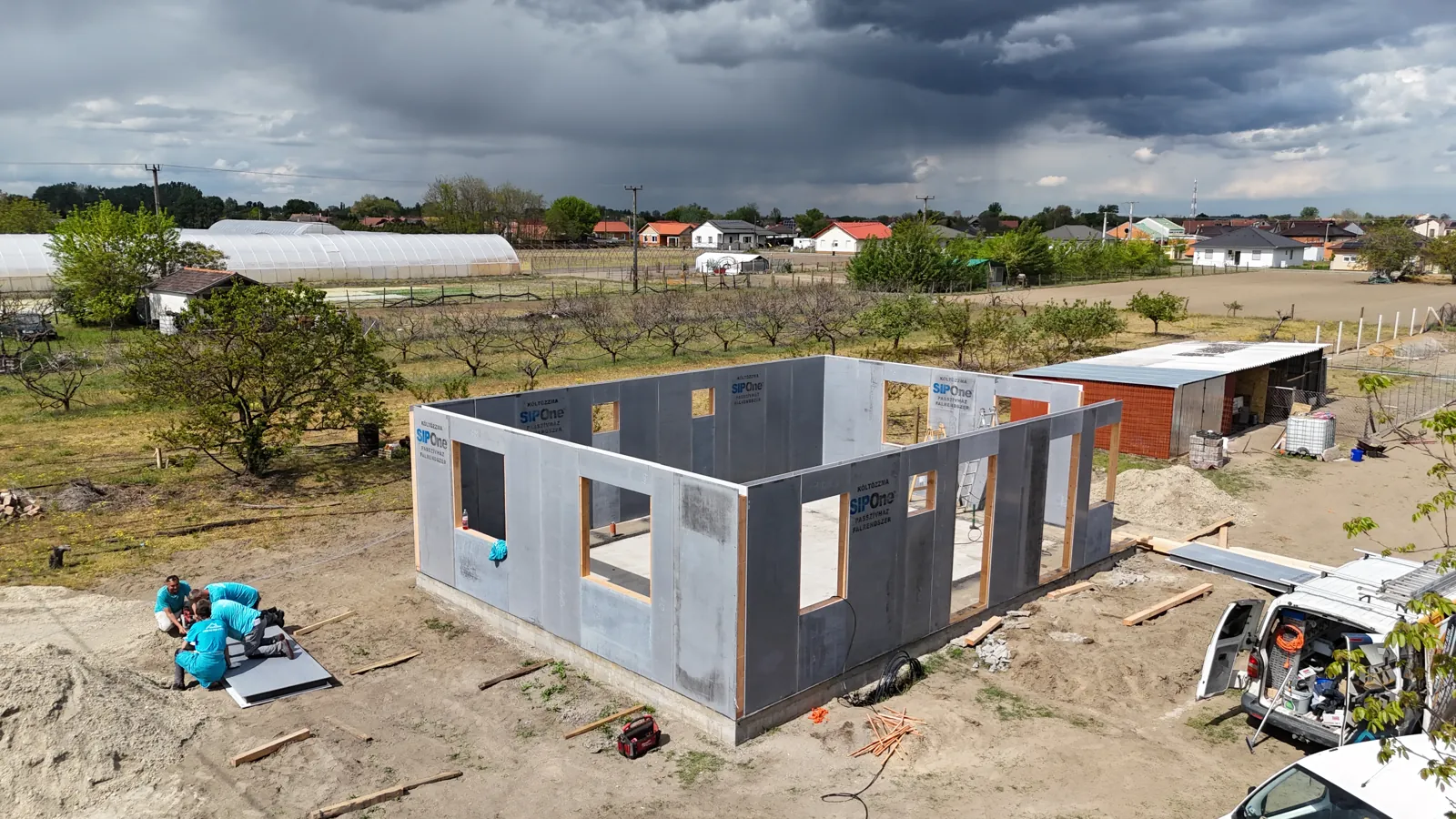
Disadvantages of SIP Houses: An Honest List
Odd for a SIP builder to write about its own technology's weaknesses? We don't think so. Here is everything worth knowing before you build, and what we do about each point.
Read more →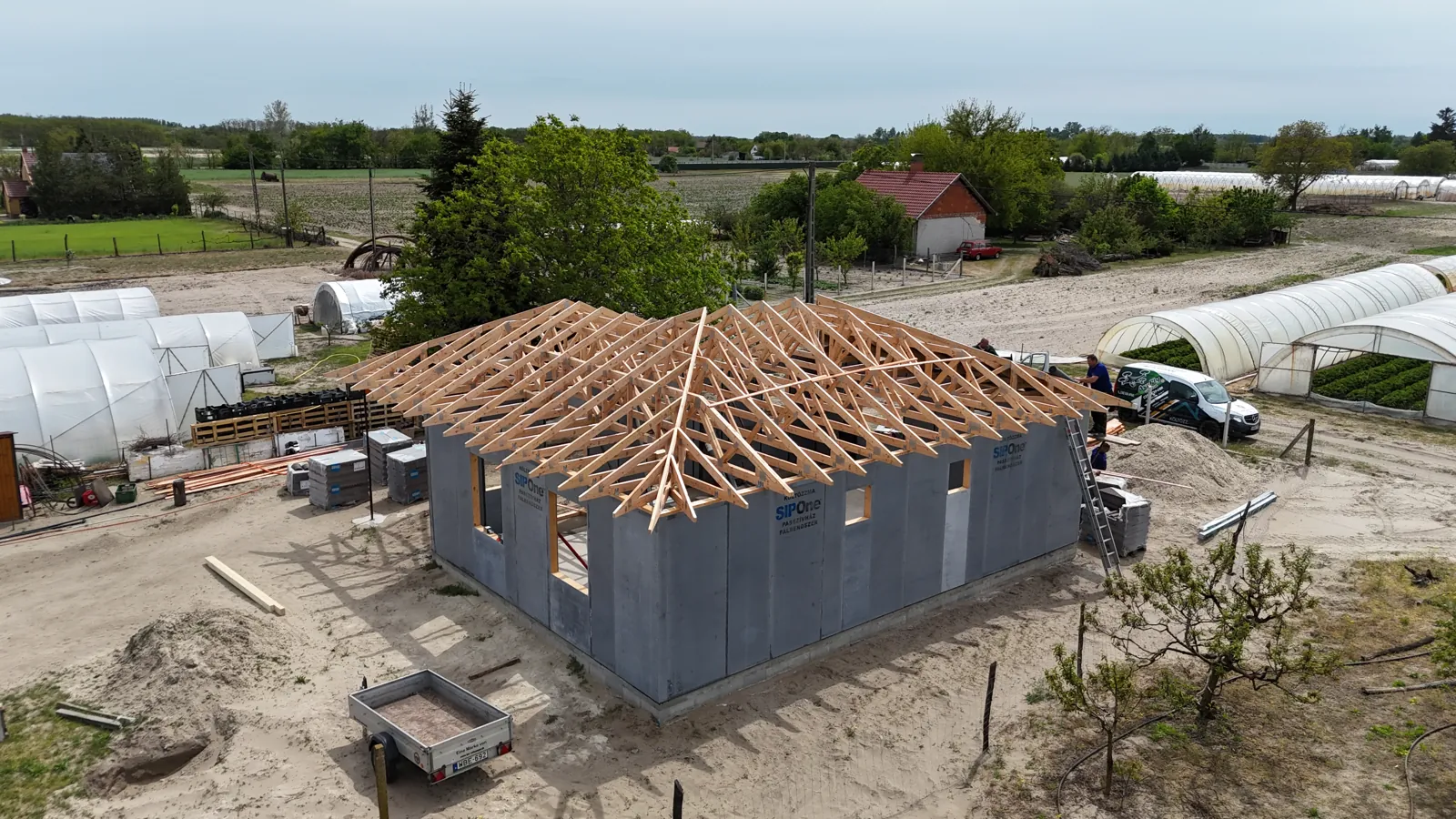
10 Myths About Lightweight Houses, Debunked
Everyone in Hungary has an opinion about lightweight construction, including people who have never set foot in one. We go through the ten most common myths and say where each has a grain of truth.
Read more →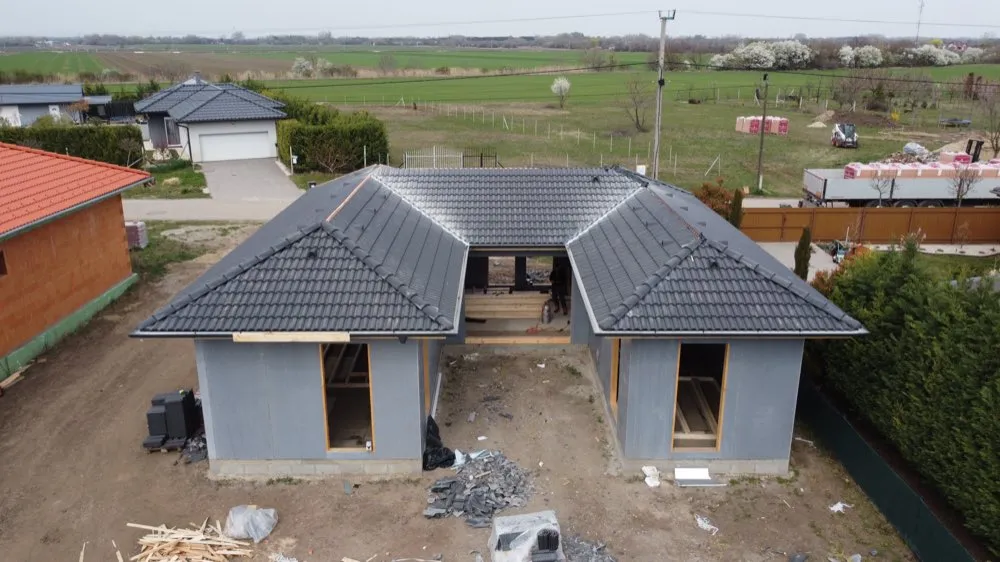
10 Questions Before Building a SIP House
It is a good sign when you ask questions. Most bad decisions are born not from wrong answers but from questions never asked – here are the ten our clients ask most often.
Read more →