Old House Electrical Rewiring: When Is a Full Replacement Needed?
An old house's wiring keeps working long after it has stopped being safe. Then come the air conditioning, the induction hob and the heat pump, and it trips. When is a repair enough, and when does the whole system need replacing?
The electrical system is one of the least visible yet most heavily loaded systems in a family house. In a Hungarian cube house built between the 1960s and the 1980s it was typically designed for few circuits, low power and a completely different pattern of consumption. Back then a household had one fridge, one washing machine and one television. Today the same house has air conditioning, a dishwasher, an oven, an induction hob, a hot water cylinder, computers and, increasingly, a heat pump, solar panels and an electric car charger.
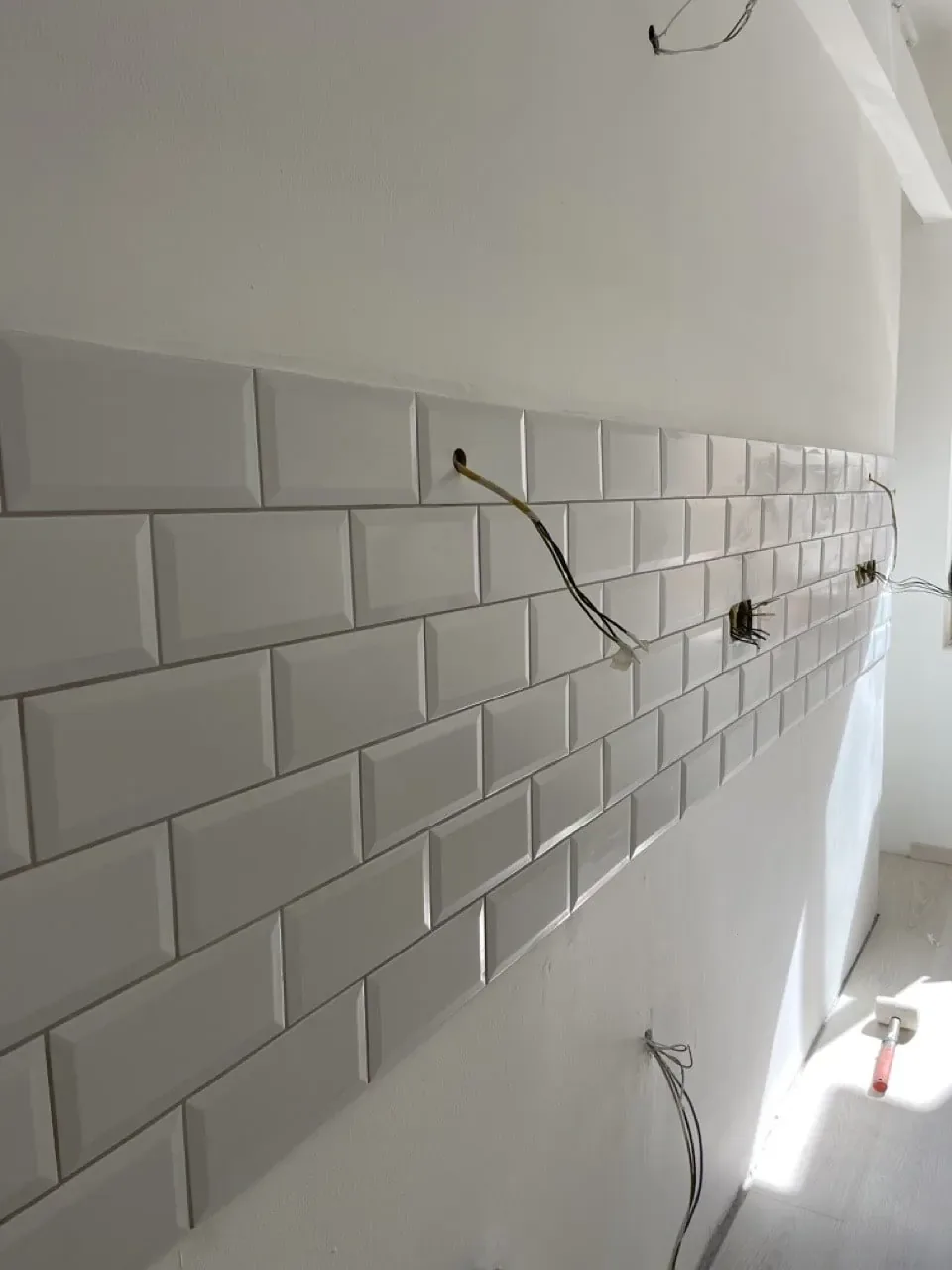
A house renovation is the only sensible moment to replace the wiring. While the walls are open, replacing the cables is relatively cheap. With finished tiles and paintwork, the same job means demolition, dust and twice the cost.
Key takeaways
- Aluminium wiring, old fuses, unearthed sockets and the absence of a residual-current device almost always mean a full replacement.
- Frequent tripping, a warm socket and flickering lights are warning signs, not a nuisance.
- A modern household (air conditioning, induction, heat pump, electric car) needs more circuits and more power.
- Replacing the wiring belongs at the start of a house renovation: before plastering, tiling and painting.
- Meter point standardisation and a power upgrade have to be agreed with the electricity network operator, and this can take weeks.
Warning signs: when should you be suspicious?
- The breaker trips often, especially when the kettle and the microwave are running at the same time.
- A socket or a switch gets warm, or its cover has discoloured.
- The lights flicker when a larger appliance switches on.
- Two-pin (unearthed) sockets in the living areas.
- A distribution board with screw-in fuses, or no residual-current device (RCD).
- The household runs on extension leads because there are too few sockets.
- A burning smell or crackling from the wall or the junction boxes.
The last two are a direct fire hazard. In that case the question is not when to schedule the renovation, but how soon a professional inspection can take place.
Aluminium wiring: why is it a problem?
Between the 1960s and the 1980s, the wiring in many houses and flats in Hungary was installed with aluminium cable. It was an accepted solution at the time, but aluminium tends to loosen and oxidise at the connections. A loose connection heats up, and the insulation ages and cracks over time. On top of that, the cross-sections and circuits of the old systems were sized for a fraction of today's load.
Patching an aluminium system, replacing the odd section with copper, is not a solution: a copper-to-aluminium joint is a risk point in itself. In a house renovation, aluminium wiring should be replaced in full.
Repair or full replacement? Decision table
| Condition | Recommended action |
|---|---|
| Copper wiring, distribution board with miniature circuit breakers, an RCD fitted, enough circuits | Inspection, extension, new sockets and switches |
| Copper wiring, but few circuits and no RCD | New distribution board, RCD, new circuits for the large appliances |
| Aluminium wiring anywhere in the system | Full replacement |
| Screw-in fuses, unearthed sockets | Full replacement |
| Heat pump, electric car charger or solar panels planned | Power upgrade, new distribution board, typically full replacement |
| Loft conversion, extension | New wiring in the new part, inspection of the distribution board and the supply |
What does a family house's wiring need to handle today?
The system should be sized not for today's consumption but for the next 30 years. In a modern family house this typically means the following:
- Separate circuits for the large kitchen appliances (hob, oven, dishwasher), the washing machine and tumble dryer, the hot water cylinder and the air conditioning.
- A three-phase supply if a heat pump, an induction hob and an electric car charger may all come into the picture.
- A residual-current device on every living-area circuit, and surge protection in the distribution board.
- Preparation for solar panels and an electric car charger: conduit from the roof and the garage to the distribution board, and spare space in the board.
- Low-voltage systems: structured cabling (UTP), wifi points, cameras, smart home preparation.
- Enough sockets, laid out according to the furniture and the way devices are used today, so that the house does not live on extension leads.
From the point of view of an energy-efficient house, the wiring matters as much as the insulation; we wrote about this in our article on the secret of an energy-efficient house too.
Old wiring is not dangerous because it is old. It is dangerous because today it carries a load it was never designed for.
Meter point and power upgrade: the network operator's side
If the meter point does not meet the technical requirements of the electricity distribution network operator, or more power is needed, the conversion requires a design, an application and the operator's approval. Meter point standardisation (bringing the meter point up to the utility's standard) may only be carried out by an electrician authorised to do so, and the process can take weeks, depending on the operator's scheduling.
That is why it is worth starting with this when planning a house renovation. If it turns out halfway through the renovation that there is not enough power for the heat pump, the finished heating system can stand idle for weeks.
Where does the electrical work come in the renovation order?
- Survey and design: circuits, appliances, power requirement, meter point.
- Application to the network operator, if a power upgrade or a meter point conversion is needed.
- Demolition and chasing: removing the old cables, chasing the walls, fitting the boxes.
- First fix: conduits, cables, boxes, distribution board, before plastering and before the plasterboard is closed up.
- Testing and documentation before the walls are closed; it is worth photographing the cable routes too.
- Second fix: sockets, switches, light fittings, after painting.
- Electrical safety and compliance inspection, with a written report.
So the electrical work is at both the beginning and the end of the renovation. That is why it has to be coordinated with the bricklayer, the drywall fitter, the tiler and the painter, which is one of the most important tasks of general contracting.
With TeleHome
In our house renovations we check the condition of the wiring at the survey, and in the cost estimate we show as a separate item what is necessary and what is recommended. We carry out the electrical installation and the meter point construction with our own authorised specialists, including the paperwork with the network operator. Request a survey in Budapest or Pest County.
Frequently asked questions
How do I know whether the house has aluminium wiring?
It can be seen in the distribution board or behind a removed socket: aluminium wire is silvery grey, copper is reddish brown. The definitive check should be done by an electrician, with the power switched off.
Is it compulsory to replace aluminium wiring?
For an existing system, not necessarily in itself, but in a renovation, an extension or when installing higher-powered appliances, full replacement is the safe and economical solution.
How long does it take to rewire a family house?
It depends on the size of the house and the other renovation work; the installation itself typically takes 1–3 weeks. The network operator's approval process (meter point standardisation, power upgrade) can add to this.
Can the wiring be replaced in an occupied house?
Yes, scheduled room by room, but it is much slower and dustier. If a full renovation of the house is planned, it is worth aligning the rewiring with that.
Related articles: The right order for renovating a cube house · House renovation costs 2026 · Smart home systems
Request a no-obligation quote
On-site survey, itemised cost estimate, fixed deadline and warranty – we reply within 1 business day.
- Reply within 1 business day
- Itemised cost estimate
- Fixed price, fixed deadline, warranty
Related articles
Full or Partial Apartment Renovation? When Each One Pays Off
Just the bathroom, or the whole flat? A partial renovation looks cheaper. Sometimes it is; sometimes you pay twice for the same thing. We show you where the line is.
Read more →
House Renovation Costs 2026: What They Depend On and Where to Save Wisely
"How much does it cost to renovate the house?" There is no honest number for that over the phone. What can be said precisely is what the price depends on, what takes the larger part of the budget, and where you can save without paying twice.
Read more →
Construction Industry 2026: Prices, Demand and Outlook for 2027
Falling output, rising prices, uncertain subsidies: the construction industry looks contradictory in autumn 2026. We have gathered the latest figures and translate what they mean for anyone planning to renovate or build in 2027.
Read more →