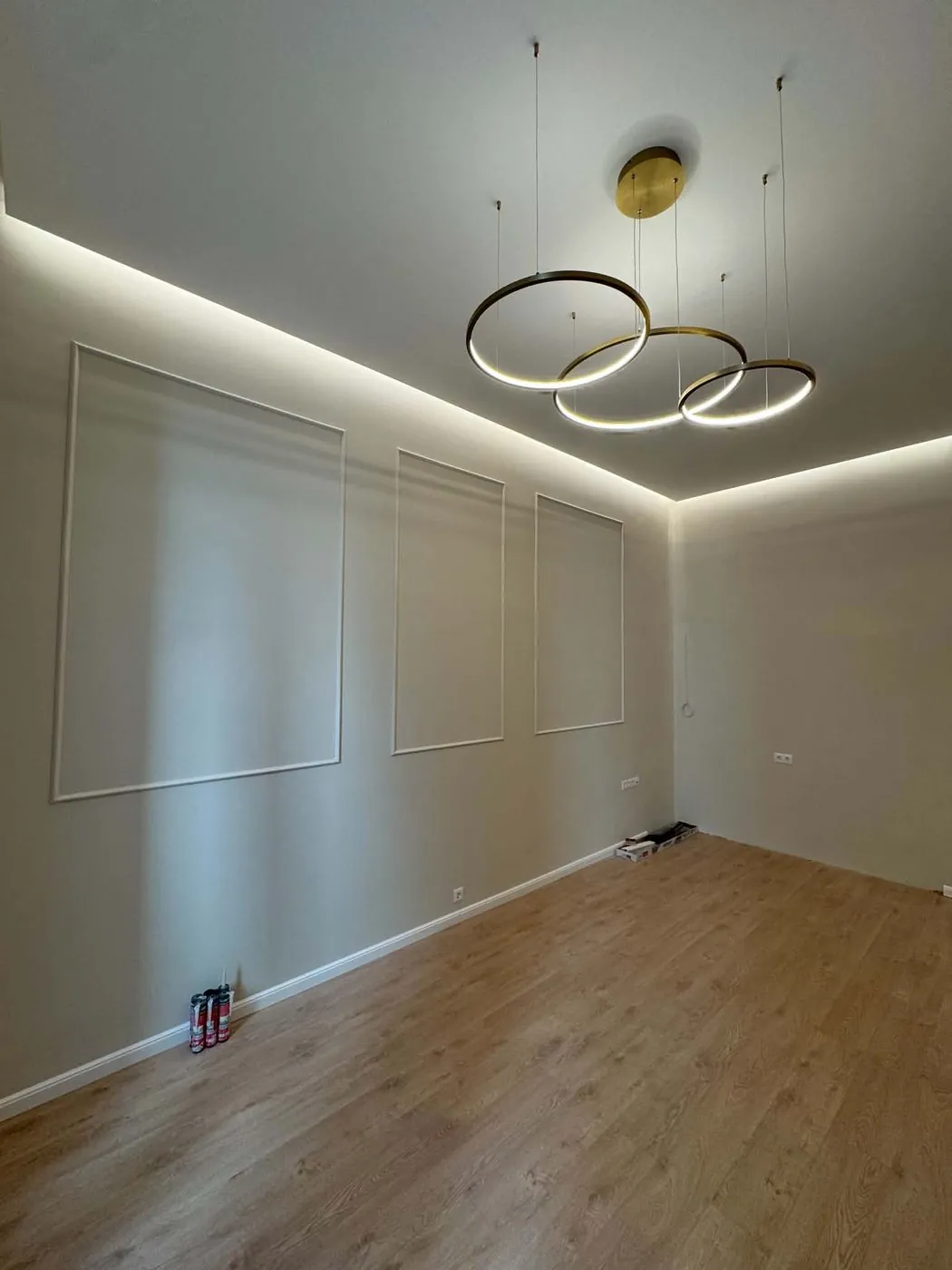
Full or Partial Apartment Renovation? When Each One Pays Off
Just the bathroom, or the whole flat? A partial renovation looks cheaper. Sometimes it is; sometimes you pay twice for the same thing. We show you where the line is.
Most enquiries start with: "we just want the bathroom and the kitchen done". That is entirely understandable. The cost is lower, the renovation is shorter and there is less disruption. On the site survey, however, it often turns out that a 50-year-old steel pipe runs behind the bathroom, the kitchen has two sockets on one circuit, and the subfloor moves under the parquet.
Then a decision has to be made: renovate the visible part and leave the rest for later, or put right what is in the walls and the floor at the same time, with a full apartment renovation. There is no answer that suits everyone, but there are criteria that can be measured well.
Key takeaways
- A full apartment renovation renews not only the visible surfaces but also the plumbing and heating, the electrical wiring and the subfloor.
- A partial renovation pays off when the flat's "hidden" systems are in good condition and the renovated room can be closed off on its own.
- Going in stages gets expensive where the trades overlap: wiring and pipes, subfloor, doors, painting.
- In an old Budapest flat the condition of the electrics and the water pipes almost always settles the question.
- If the money is not enough for everything, the right answer is not a partial renovation but a phased full renovation.
What does a full apartment renovation mean?
Many people use the word "full" as a synonym for "everything new". In more precise trade terms: we renew every system that runs in the walls, the floor and the ceiling, and build the new surfaces on top of them.
A full (complete) apartment renovation typically includes:
- demolition: old tiles and flooring, sanitaryware, wiring and pipes, partition walls if needed;
- electrical work: new wiring, distribution board, circuits, meter-point standardisation if needed;
- water, waste and heating installation: new pipes from the riser, pressure test, radiators or underfloor heating;
- masonry and drywall work: plaster repairs, plasterboard, suspended ceilings, partition walls;
- subfloor: levelling or a new screed;
- surface finishes: skimming, painting, tiling and flooring;
- doors and windows: interior doors, window replacement on request;
- fittings and installation: sanitaryware, kitchen, lighting, air conditioning.
The key is the order and the coordination: each trade works for the one that follows. This is carried through most reliably in one pair of hands, under general contracting. We described the exact week-by-week schedule in our article on the full apartment renovation timeline.
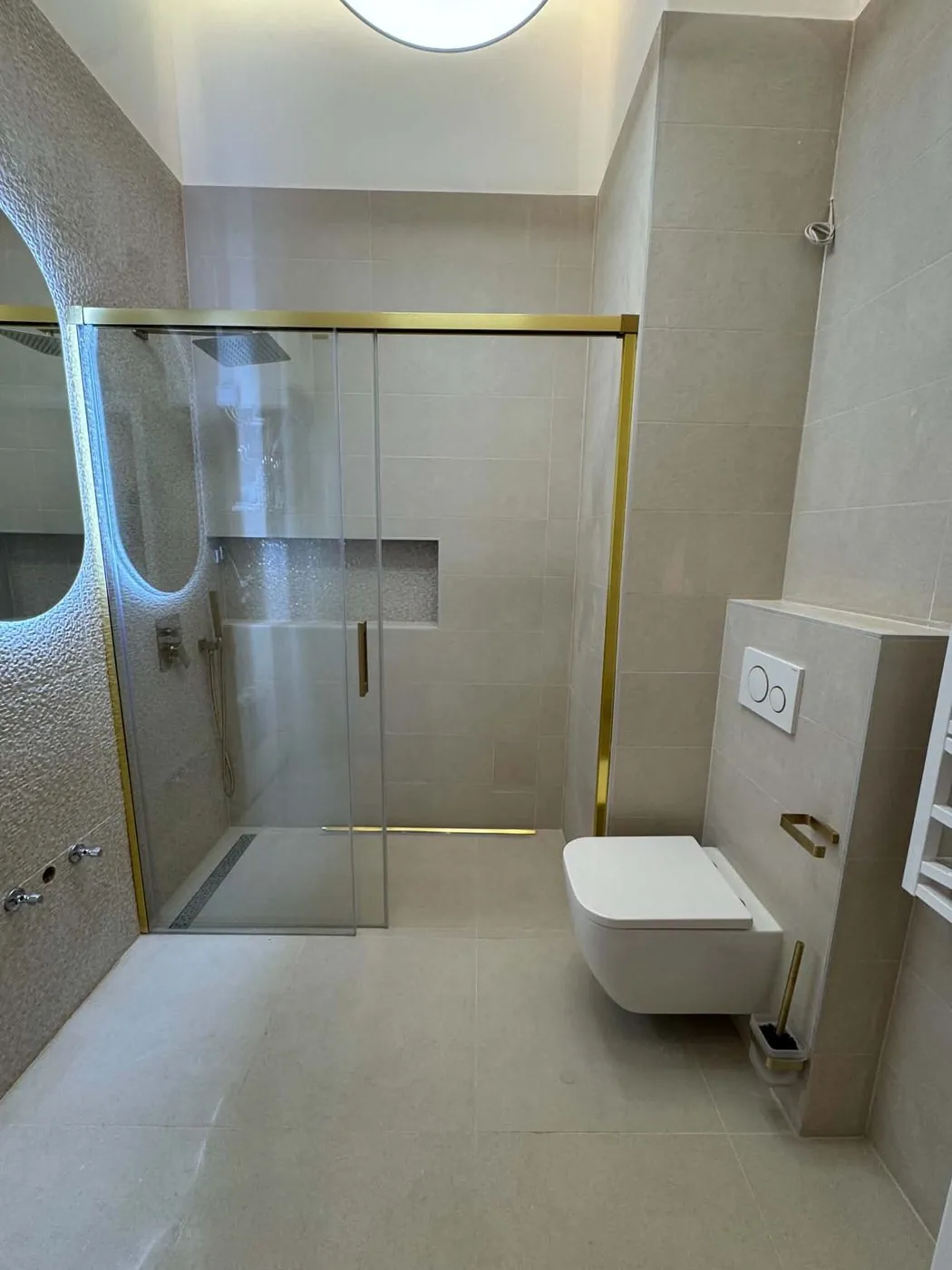
When is a partial renovation enough?
A partial renovation is not a bad decision, except when it leaves untouched a system that will soon need replacing. It is a good choice if:
- The plumbing, heating and electrics are less than 15–20 years old, and the survey confirms it (copper wiring, a distribution board with circuit breakers, plastic water pipes).
- The renovated room can be closed off on its own. A bathroom or a kitchen is like this in most flats.
- The subfloor and the floor level do not change, so the doors and the flooring of the adjoining rooms can stay.
- There is a short-term goal: a refresh before letting, a renovation before selling, where the aim is a visible improvement at low risk.
- There was a full renovation recently, and now the aim is only to modernise one or two rooms.
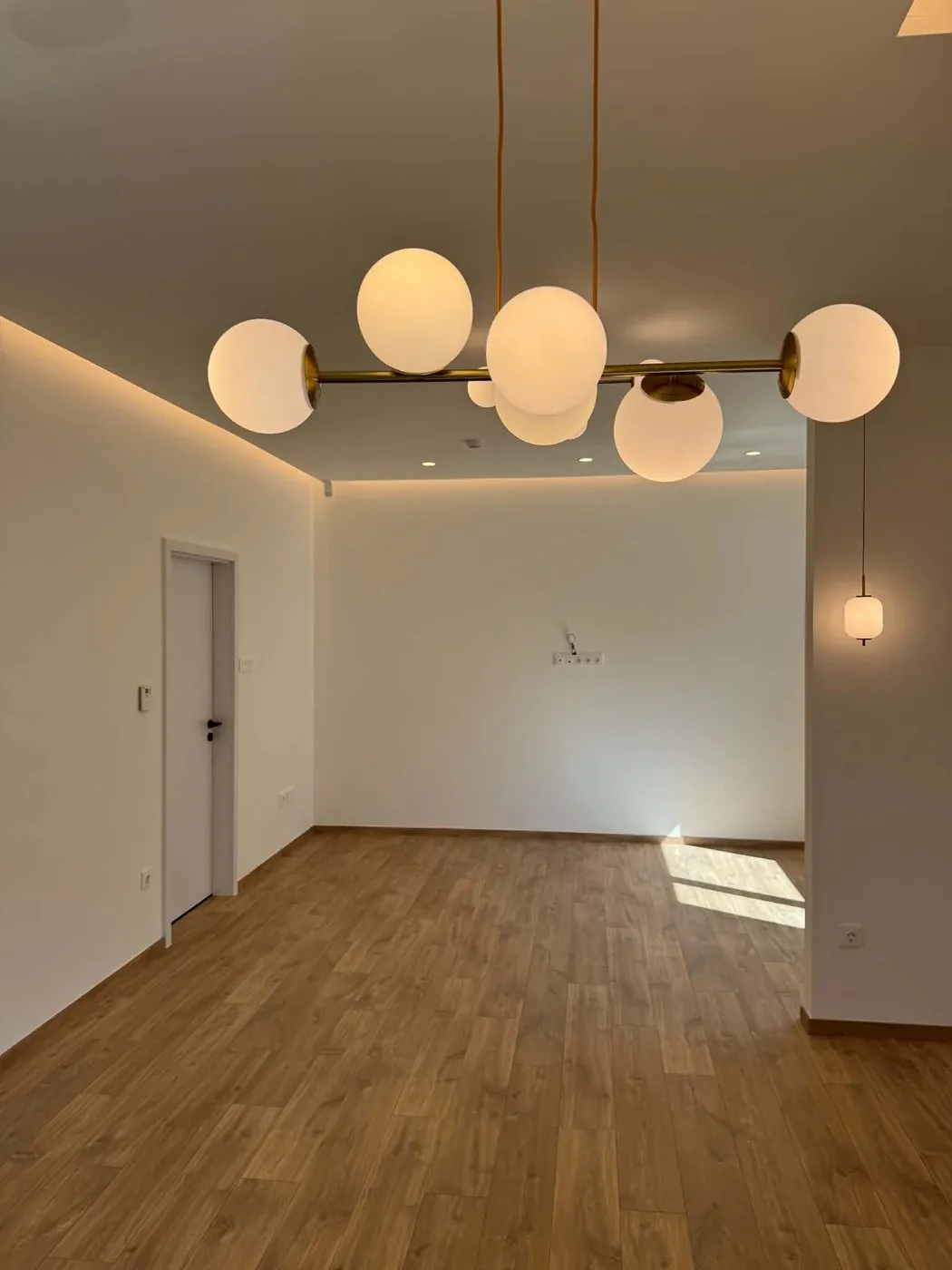
When does doing it in stages become more expensive?
The hidden cost of a partial renovation is what has to be done twice. A few typical examples from Budapest flats:
| Situation | With a partial renovation | With a full renovation |
|---|---|---|
| Old electrical wiring | 1–2 years after the fresh bathroom the walls have to be chased again for the other rooms, and the hallway and entrance hall are painted again | Chased once, painted once |
| Aged water pipes | The kitchen is new, but the old section coming from the riser stays in the wall; if it leaks, the fresh tiles have to be broken out | The whole section is replaced up to the riser |
| Different floor levels | The new flooring is higher, the interior doors have to be cut down or replaced | Subfloor designed to one level, new doors once |
| Heating upgrade | The new radiator goes onto the old pipework | New pipework, correctly sized radiators or underfloor heating |
| Painting | Done again on the adjoining walls in every stage | Once, at the end |
| Site set-up | Demolition, rubble removal, stairwell protection in every stage | Once |
The site set-up cost (skip, material deliveries, protective sheeting in the stairwell, cleaning) comes up again in every stage. In an apartment building it also tests the neighbours' patience all over again each time round. We wrote about this in detail in our article on renovating a flat in an apartment building.
A partial renovation is not made expensive by what we do, but by what has to be done once more afterwards.
Decision aid: 5 questions after the survey
- How old is the electrical wiring, and what is it made of? Aluminium wiring, fuse wire, few circuits = full replacement, and from then on it is very hard to proceed partially.
- What are the water pipes and the waste pipes like? With galvanised steel pipes and cast-iron waste pipes, the sections running in the walls need replacing as well as the wet rooms.
- Does the floor plan change? If a wall is removed or moved, it almost always affects the whole flat (electrics, floor, painting).
- How long will you stay in the flat? If at least 8–10 years, a full renovation typically pays for itself thanks to the longer service life.
- Are we working in an occupied flat or an empty one? An empty flat is the ideal situation for a full apartment renovation: faster, cheaper, cleaner.
If most of the answers point towards a full renovation but the budget is tight, do not cut back on the technical content. Instead, choose the surface materials (tiles, sanitaryware, furniture) from the mid-range, and replace them later. A tile can be replaced in 10 years' time without demolition; a bad cable behind the wall cannot.
Phased full renovation: the middle way
If a full apartment renovation does not fit into the budget all at once, phasing is a good solution, but not room by room: layer by layer:
- Stage 1: demolition, complete electrical and plumbing first fix, subfloor, plaster. This is the "invisible" part that we do not want to break open later.
- Stage 2: tiling and fitting out of the wet rooms, painting; the flat is habitable from this point.
- Stage 3: kitchen, parquet and laminate flooring, fitted furniture, lighting, air conditioning.
This way each stage works for the next one, not in its place. It is also worth having the cost estimate prepared stage by stage, so that it is clear exactly what each part costs.
How do you decide, together with us?
TeleHome starts every apartment renovation with an on-site condition survey. After the survey you receive an itemised cost estimate, and if you ask, in two versions: for a partial and for a full renovation, or broken down into stages. So you see in numbers what the partial route costs and what a full renovation saves in the long run. We work in all 23 districts of Budapest and in the commuter belt: request a no-obligation quote.
Frequently asked questions
What does a full apartment renovation include?
Demolition, new electrical wiring and plumbing, masonry and drywall work, subfloor, skimming and painting, tiling and flooring, interior doors, and the installation of the sanitaryware, the kitchen and the lighting. The exact content is set out in the itemised cost estimate.
How much more expensive is a full renovation than a partial one?
Significantly in the short term, since more work is done. In the longer term often not, because with a partial renovation the demolition, the site set-up, the painting and the work of some trades come up several times. The difference can be quantified with a two-version cost estimate.
Can a Budapest flat be renovated in stages?
Yes, if the electrics and the plumbing and heating are in good condition, or if the phasing goes layer by layer: first the systems running in the walls and the floor, then the surfaces and the furniture.
How long does a full apartment renovation take?
For a 60 m² brick-built flat typically 10–12 weeks of construction, for a panel flat 6–10 weeks, for a larger period flat 12–16 weeks, depending on the technical content.
Related articles: Full apartment renovation timeline week by week · Apartment renovation costs 2026 · Choosing a renovation company in Budapest: 12 questions
Request a no-obligation quote
On-site survey, itemised cost estimate, fixed deadline and warranty – we reply within 1 business day.
- Reply within 1 business day
- Itemised cost estimate
- Fixed price, fixed deadline, warranty
Related articles
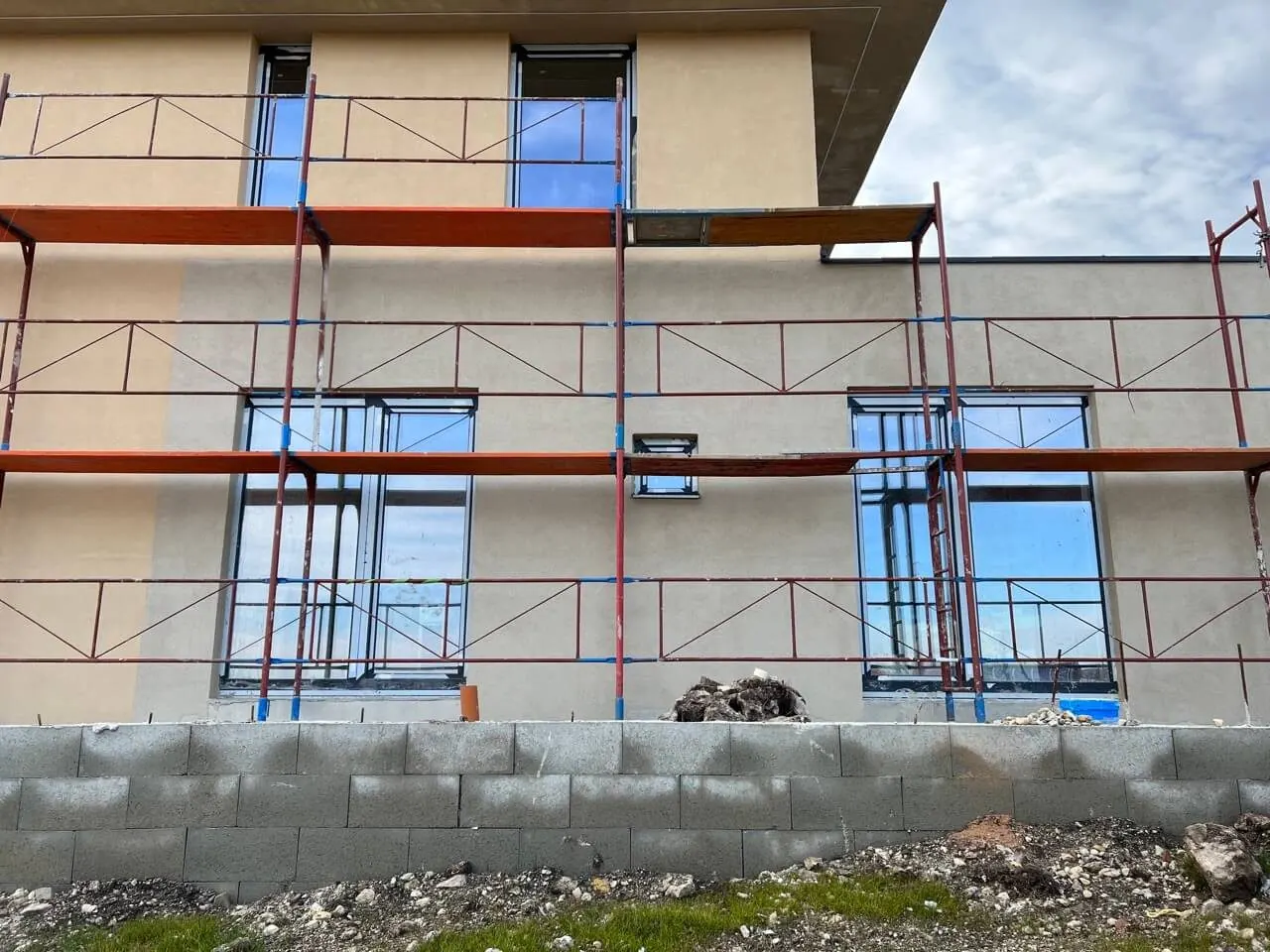
House Renovation Costs 2026: What They Depend On and Where to Save Wisely
"How much does it cost to renovate the house?" There is no honest number for that over the phone. What can be said precisely is what the price depends on, what takes the larger part of the budget, and where you can save without paying twice.
Read more →
Construction Industry 2026: Prices, Demand and Outlook for 2027
Falling output, rising prices, uncertain subsidies: the construction industry looks contradictory in autumn 2026. We have gathered the latest figures and translate what they mean for anyone planning to renovate or build in 2027.
Read more →
Kitchen Renovation: From Planning to Installation
The kitchen is the most used room in a flat and the one that needs the most trades: electrics, water, drainage, ventilation, tiling, joinery, all in one square metre. That is why it is where most renovations go wrong.
Read more →