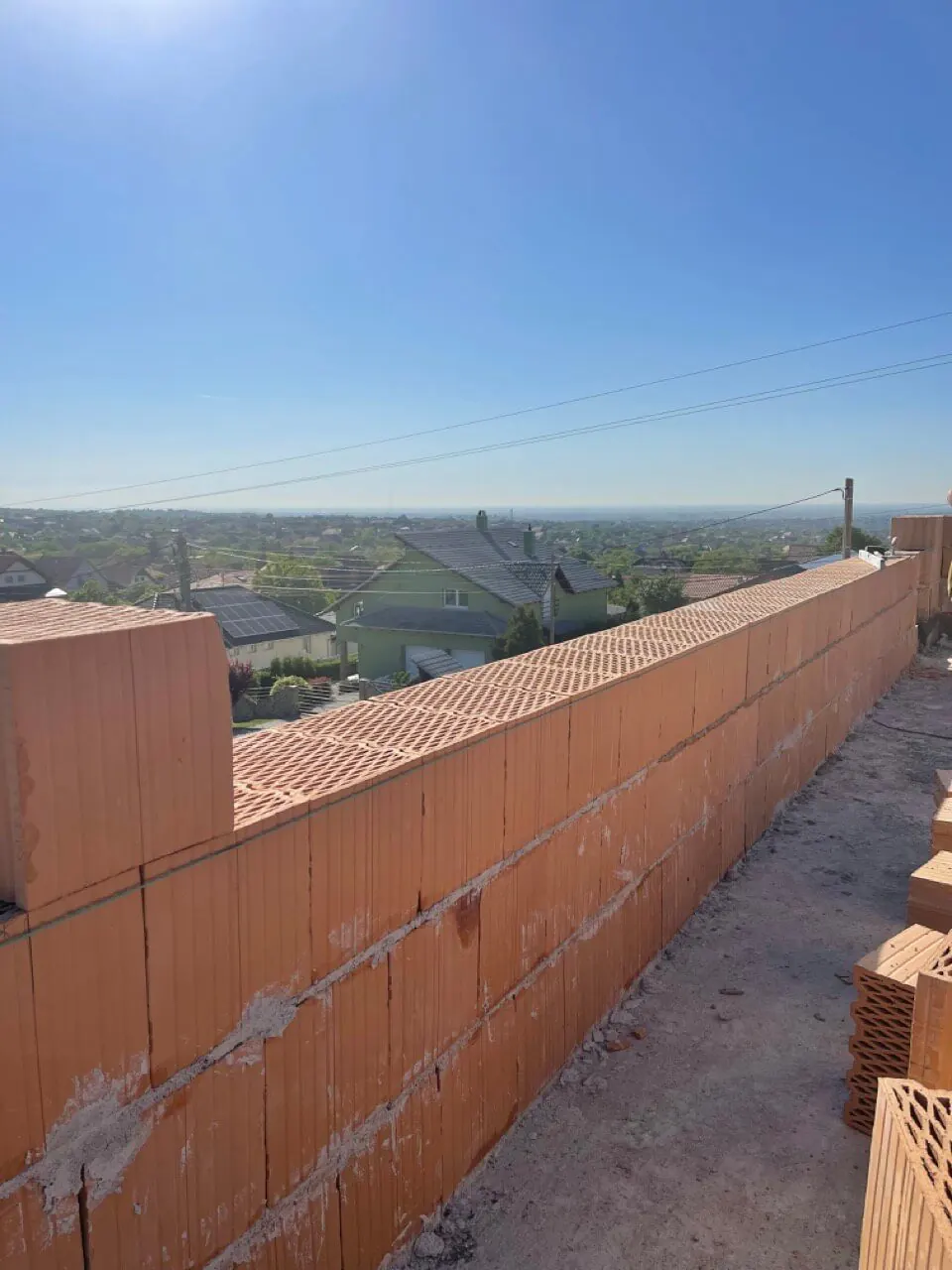
Construction Industry 2026: Prices, Demand and Outlook for 2027
Falling output, rising prices, uncertain subsidies: the construction industry looks contradictory in autumn 2026. We have gathered the latest figures and translate what they mean for anyone planning to renovate or build in 2027.
Two contradictory pictures emerge from the news. According to one, the construction industry is at a low point: data from KSH (the Hungarian Central Statistical Office) show that output fell sharply in the summer of 2026, and new contracts are also behind last year's. According to the other, everything is getting more expensive: building materials, labour, transport. Both are true, and together they explain what a client can expect.
Key takeaways
- Construction output in July 2026 was 12.2% below the level of a year earlier; for January–July the decline is 2.7%.
- The volume of new contracts was 24.8% lower in July and 41.9% lower in June than a year earlier: the order books of the large projects are weakening.
- Meanwhile prices are rising: construction producer prices in the second quarter of 2026 were 5.3% higher than a year earlier.
- In the spring, energy and oil prices caused rapid price rises in several material groups; the price of EPS temporarily rose by 60–80%.
- Household renovation demand, by contrast, is picking up, and labour costs keep rising.
- No price fall is expected for 2027; at best the cost of renovating and building will rise more slowly.
What do the KSH figures show?
According to the flash report of the Hungarian Central Statistical Office published on 14 September, the volume of construction output in July 2026 was 12.2% below that of a year earlier, and 4.6% below June. Building construction fell by 10.7%, civil engineering (roads, railways, utilities) by 14.0%.
| Indicator (KSH) | June 2026 | July 2026 |
|---|---|---|
| Volume of output, vs the same month of the previous year | −1.2% (adjusted for working days −5.0%) | −12.2% |
| Volume of new contracts, vs the previous year | −41.9% | −24.8% |
| Order book at the end of the month, vs the previous year | −0.4% | +0.8% |
| Construction producer prices (Q2, vs the previous year) | +5.3% | – |
Between January and July the volume of output was 2.7% lower than in the same period of 2025; the value of output at current prices was HUF 4,400.9 billion. Within civil engineering, utility construction fell by more than half, and road and railway construction by a quarter. Specialised construction activities, which include most renovation work, on the other hand grew by 0.5%.
In other words: the decline is caused primarily by the slowdown of large state and infrastructure investments. The household renovation market is moving on a different track.
Building material prices in 2026: spring shock, summer easing
In the first half of the year the building materials market was driven by energy and oil prices. In March the head of the building materials trade section of ÉVOSZ (the Hungarian construction industry association) said that manufacturers had signalled increases of 5–15% from April:
- bricks and masonry materials: 10–15%;
- plasterboard, reinforcing steel and other steel products: 5–10%;
- petroleum-based products (EPS, XPS, bituminous waterproofing, adhesives): double-digit increases possible;
- transport: 5–10%.
The reasons cited included rising natural gas and electricity prices, more expensive diesel and the weakening of the forint; around half of the building materials used are imported or made from imported raw materials. An interesting comparison: the same merchant measured an average price change of just 0.8% in 2025.
The biggest movement was in thermal insulation materials: according to Pénzcentrum's summary, the price of EPS rose by 60–80% in the spring. In June, as oil prices fell, merchants were already expecting some easing, but did not expect a return to the earlier level.
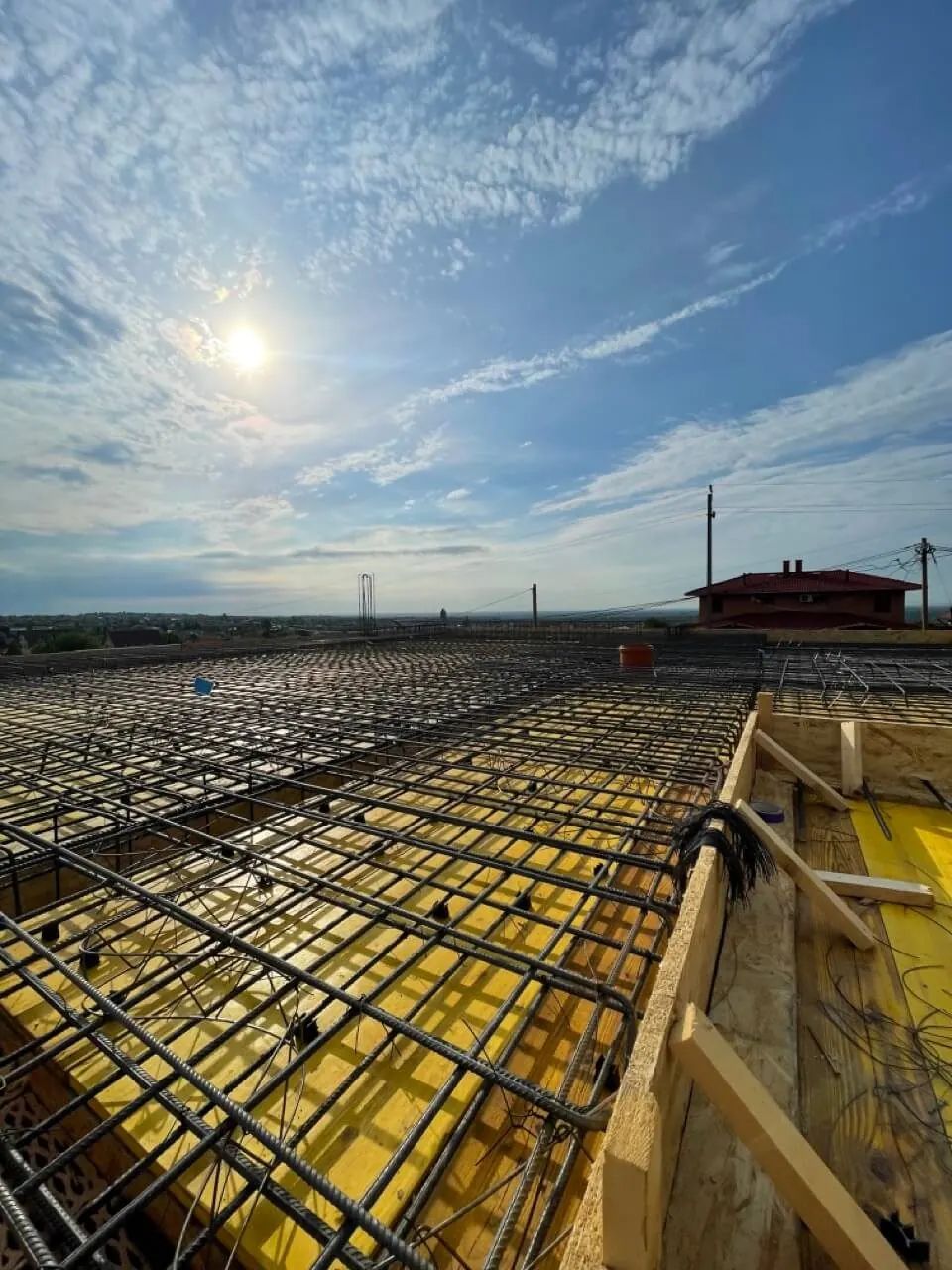
Labour: the quiet but lasting price rise
Unlike material prices, labour costs do not jump around; they rise steadily. The shortage of skilled tradespeople has not eased, and good teams are booked up months in advance. According to industry sources, the rise in renovation and building costs in 2026 is driven primarily by labour.
For a client this means two things. First, the expectation that “it will be cheaper next year” will almost certainly not come true for labour. Second, capacity, meaning a free slot for a reliable, well-established team, is itself a value worth booking in good time.
Subsidies and rules: what is changing?
- Családi Energetikai Program (the Family Energy Programme): the new government has announced a programme aimed at the energy upgrade of 100,000 properties a year; the application conditions were not yet known in the summer of 2026. Many people are holding off on insulation because of this, which the industry considers risky given the rising prices.
- Home energy storage programme: at the end of September the government expanded it; around 15,000 more families can receive support, and the deadline for the documents is 26 February 2027.
- Otthon Start (the fixed 3% home loan): the Ministry of Finance is reviewing it; an age limit, an income limit and a regional cap on the price per square metre have all been raised, but no decision has been made. It cannot currently be used for renovation.
- 5% VAT on new homes: under the 2024 amendment the reduced rate applies if the building permit or the simple notification procedure is completed by 31 December 2026 (for houses up to 300 m² and flats up to 150 m²). Anyone planning to build a house in 2027 should check this deadline with a tax adviser.
In construction it is rarely the contractor who commits today that is expensive. It is what has to be renegotiated tomorrow.
What can you expect in 2027?
The following is our professional assessment based on the data above, not a forecast.
- It is not worth waiting for prices to fall. Some materials (insulation materials, for example) may be cheaper than at the spring peak, but labour and the price of most materials will typically keep rising, at most more slowly.
- The slowdown of large projects may free up capacity. For household clients this may bring shorter waiting times and easier scheduling, less so lower prices.
- Subsidies are unpredictable. Before an energy renovation it is worth watching the conditions of the new programme, but the renovation should not be built solely on it.
- An itemised cost estimate and a fixed price are worth more than ever. In a volatile market, a fixed technical specification and a contractual deadline are the client's most important protection.
What to do if you plan to renovate or build in 2027
- Request a survey and an itemised cost estimate in the autumn, so that you have a contract and booked capacity before the spring season.
- Fix the price and the technical specification in the contract, and clarify what happens in the event of a significant change in material prices.
- Order the items with long manufacturing lead times (windows and doors, kitchen, interior doors) in good time.
- Do not wait for a subsidy with work that cannot be postponed: a leaking roof or old wiring will not wait.
- Compare quotes line by line, not by the total. Our article on choosing a renovation company helps with this.
With TeleHome
TeleHome takes on every apartment renovation, house renovation and brick/YTONG house build with an itemised cost estimate and a deadline fixed in the contract. We usually have free capacity within two months; if you would like to start in spring 2027, now is the time to request a quote.
Frequently asked questions
Will renovation be cheaper in 2027?
Unlikely. The price of some materials may ease after the spring 2026 peak, but labour costs and construction prices as a whole will keep rising. According to KSH, construction producer prices in the second quarter of 2026 were 5.3% higher than a year earlier.
Why is construction output falling if everything is getting more expensive at the same time?
The decline is caused mainly by the slowdown of large state and infrastructure investments. The price rises are driven by energy, oil and exchange rate effects and by rising labour costs. The two processes are happening at the same time.
Is it worth waiting for the new energy subsidy before insulating?
Only if the work is not urgent. The conditions of the Családi Energetikai Program (the Family Energy Programme) were not yet known in the summer of 2026, while material prices and labour costs rose in the meantime. Work that cannot be postponed should not be delayed while waiting for a subsidy.
When is the right time to sign a contract for work in 2027?
In the autumn or early winter: there is still time for the survey, the cost estimate and the decisions, and capacity can be booked for the spring season.
Related articles: Apartment renovation prices 2026 · House renovation costs 2026 · What does a turnkey price include?
Sources
- KSH – Construction, July 2026 (published 14 September 2026)
- KSH – Construction, June 2026 (published 13 August 2026)
- Népszava – Building material prices soar (18 March 2026)
- Pénzcentrum – Huge price rises in the construction industry (6 July 2026)
- Pénzcentrum – Expansion of the energy storage programme (28 September 2026)
- nool.hu – Otthon Start changes (15 September 2026)
- Bankmonitor – 5% VAT on homes (8 May 2024)
Request a no-obligation quote
On-site survey, itemised cost estimate, fixed deadline and warranty – we reply within 1 business day.
- Reply within 1 business day
- Itemised cost estimate
- Fixed price, fixed deadline, warranty
Related articles
Full or Partial Apartment Renovation? When Each One Pays Off
Just the bathroom, or the whole flat? A partial renovation looks cheaper. Sometimes it is; sometimes you pay twice for the same thing. We show you where the line is.
Read more →
House Renovation Costs 2026: What They Depend On and Where to Save Wisely
"How much does it cost to renovate the house?" There is no honest number for that over the phone. What can be said precisely is what the price depends on, what takes the larger part of the budget, and where you can save without paying twice.
Read more →
Kitchen Renovation: From Planning to Installation
The kitchen is the most used room in a flat and the one that needs the most trades: electrics, water, drainage, ventilation, tiling, joinery, all in one square metre. That is why it is where most renovations go wrong.
Read more →